We structure our opinions on a lot of artifacts: books, movies, papers, and other expressions of authorial intent. Why not reviewing a year?
This is also a way of putting some distance between myself and the great deal of angst and suffering in the world. Yet distance allows to make sense of the individual struggles and to call things by their name. I am open to engage more seriously in these topics. For now, enjoy the format.
2025 has many interesting characters and sub-plots, but most of these end in cliffhangers. There are three themes in this review: politics, technology, and – of course – my own updates.
Politics: A witless political thriller with too many plot devices
There were two main highlights of 2025 to me, and the scene is set in Washington and Brussels.
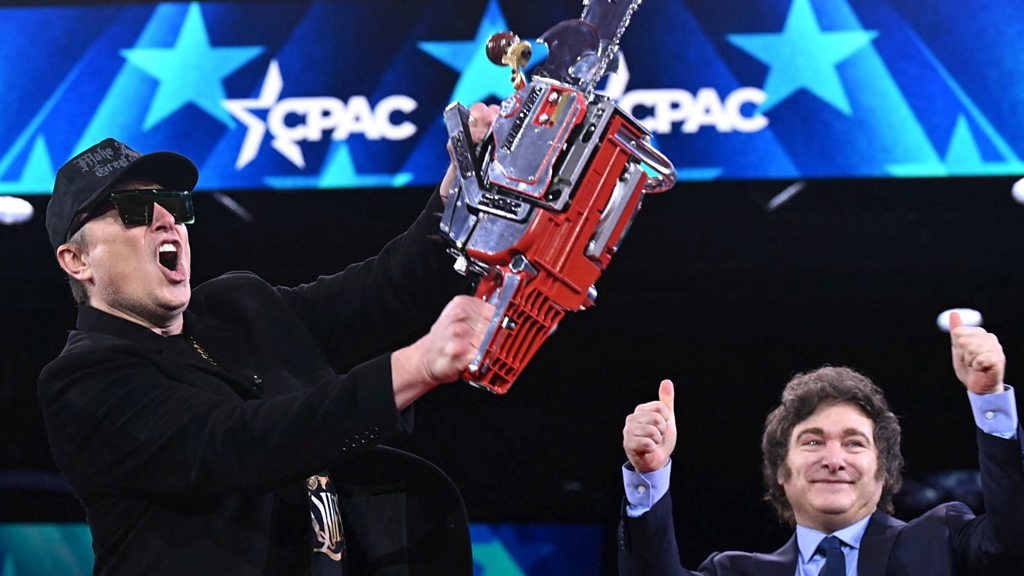
The dialogue on institutional reform is intriguing yet poorly written
The Donald has been the real MacGuffin of 2025. The US president has been in the spotlight for more than a decade and everybody has a hot take on his divisive style. In 2025 he played his role acting all scenes in an improvised fortissimo. The plot developed for internal and international affairs, and in institutional style.
One in two Americans agree with a core message: institutions don’t work. Their The revolutionary zeal is back in the control room: he bashed research programs (on this: the excellent Jeff Tollefson on Nature); dismembered the department of education; slashed foreign aid; and lambasted the United Nations. The US spent 70 years on institution building just to have them taken over and neutered. With the capabilities now degraded from within, that core message is now inevitable.
Institutions are seen as bloated cost centers allergic of ROI calculations. There is much to be desired from public functions and private NGOs, from budget choices, to lack of communication, to a culture that puts protocol above common sense (check out Philip Howard). However, from the Donald’s perspective the greatest crime of institutions is promoting rights through laws: the universalism of rights clashes with the particularism of nature; laws and regulations are horrid opposites to responsibility and will. All this is very much ‘agreeable Bond villain’ cliché. I was expecting 2025 to be better written.
One takeaway is that time is ripe for sweeping reforms. In 2025 we could have had a nuanced debate on collaborative reforming: it worked remarkably well for the Irish when they set up their Constitutional Convention 10 years ago. We could have had the massive rationalization only revolutions can give: Napoleon set up a commission of brilliant judged that in less than three months (warp speed!) laid out the foundations of modern law. Instead, we had an episode on show-business. With a strong spirit and a sharp mind Elon Musk started the Department of Government Efficiency, just to rage-quit when he realized that government are complex systems whose externalities are hard to identify and optimize. Who would have thought.
The court intrigue was 2025’s best side-plot, and will be expanded in the sequel. We had billionaires purchasing their ticket to the king’s court, the son-in-law collecting donations, and an open call for paying bribes crypto. And this is just what happens in the daylight. Nevertheless, this is a new, interesting development in US politics. It starts a moment of transactional relationships around the president. It is also growing more embed since the US president stretched the boundaries of presidential authority and expanded its purview. This will partly be legacy as it’s unlikely that a different party would willingly devolve powers: even with a recast, presidential authority is being redefined.
The EU as the damsel in distress was poor casting
Casting is all about finding a good match for the role. Here, Western Europe plays the part but the body language is all off and can’t connect with the audience.
Other characters gave mighty performances: China reminded the audience how the country is on a mission to engineer the future fast, in a techno-libertarian economy with heavy political coercion; the US (with much showtime) showed a speedrun to a fragmented, violent, transactional world; Russia delivered villainous quotes in its quest to “secure” its borders through theft and murder.
EU countries were always on stage, but it felt like they were reading lines from a teleprompter. 2025 is the year in which their characters almost survived. EU actors ignore, deflect, and deny the real dangers: their performance feels disconnected from the messaging and posturing of others on the stage.
Western European governments are largely stuck at the end of history (and they continue in the tradition of misreading the poor Francis Fukuyama). The best way forward is liberal democracy, the long arc of history bends towards justice, and free trade brings universal human rights (don’t ask how). Governments laid down, the rich moved their capital freely, while the poor improved by letting others more vulnerable toil away. As a society, our duty is to print out Maslow’s pyramid of needs and work our way to the top. We can do it and we will do it: there is an engine in history and works in our favor.
This plot (or worldview) does not exist in a vacuum without other actors. Behaving like you are a rom-com actor in a political thriller is off place. It may be the time to review the script: less debating regulations – it is not working to make countries more wealthy, safe, and relevant -; more aligning on priorities (what to do next), and with a convincing communication to the audience (why is it important). Either the actors get their act together or they are up to a recast.
Technology: the big AI cliffhanger
2025 has seen vast amounts of money poured into AI. This year alone saw enough money to develop the Apollo program (I recommend this excellent visual summary by Reuters). To continue in the year review, this is like the early use of CGI in movies: expensive, disappointing, and adding ease to the producer rather than joy to the viewer.
AI in 2025 is a crazy ride of US companies trying to rush for AGI, or maybe for AI-Jesus. Whether AI is a savior or a doomsday device, I see it as a solution in search of a problem. The AI advocate shall be played by Dulcamara, the snake-oil vendor pitching wine as a general pick-me up:
“This hearty booster made for you | When silver age approaches | Not only offers aid for you | But kills off rats and roaches.
The claim corroborated, | Confirmed and validated | I pass around the document | For each and all to see!”
The Elixir of Love by Donizetti (1832)
English Version by Donald Pippin available at Standford.edu
AI is both a miracle cure and dirty cheap. It is the solution to all problems, and yet 95% of GenAI pilots in business fail. It has endless potential, and yet requires more infrastructure, experts, investment, and information to work. At least, this is a classical economic argument: put enough land labour capital and coordination and anything is possible.
In 2025 this theme distorted the narrative. 2025 didn’t manage to use a tool (I will use AI..) to service demand (..to have more of this..) and satisfy a need (..to achieve that!). This year managed to use resources to have more AI to.. cliffhanger!
My 2025
My own role in 2025 is part epilogue, part trailer for 2026. We interpret years in a narrative sense (start, end, meaning): this rationalization works well for years where much stays the same, but 2025 saw the wrap up of 2024, the summer break, and the start of a new big project.
I graduated in April, tried tutoring for a while, but mostly, I rested. I took a break: from bad habits, from overthinking, from overworking. I reset by focusing on things that work well and letting go of unfit patterns. I reconnected with my family: it was long overdue and dredged up the past. But most importantly, as a character in this odd play, I found a role on stage.
My new role is that of the researcher, as a PhD candidate at Maastricht University. I am studying procurement: how managers make decisions, as to what to buy, how, and why. It’s an excellent chance to develop and learn, and I’m helped by a supporting cast fit for an Oscar: my partner, whose grounded determination pulls me back from thinking too long (just to be clear: she’s awesome); my supervisors, who share a sense of optimism and the deep feeling that just because nobody tried it doesn’t mean that you won’t succeed; and a small group of friends both rooting for me and listening to my rants.
2026: What can we wish for the sequel?

The harp in Mexican tarot nudges characters to let go of old stuff that is no longer fit for purpose. This harp card works well to summarize what 2026 can be about in personal life, politics and technology alike.
2025 has been a great year for my personal subplot. It lays the foundation for a stellar sequel where clues are fully developed. In specific:
- will the characters finally settle in Belgium? Will there be a plot twist?
- will there be an academic breakthrough? What will the Eureka! be?
- will there be a filler episode? Or will everything matter to the plot?
On the big political and technological themes, characters in 2025 have been largely stuck. To forward the plot, writers usually develop the characters – or drop them all together. For the former I wish 2026 will provide a few answers:
- will Washington manage to get a coherent narrative that can be understood and communicated or will it still be inconsistent and raving?
- will Brussels manage to deliver an authentic act despite the poor writing?
- what will be the plot twist in AI? Boom or bust?
2026 looks a year in which plot points will come to fruition.

Leave a Reply